|
Section
0401 |
|
|
May
2013 (Volume
63 - Issue 5) |
|
Our
objective: To increase awareness,
interest, and involvement in Section activities and |
| 10 - Welcome to our New Members | 16 - Recertification | |
| 17 - Unemployed Member Dues | ||
| 18 - Feedback/Advertising Rates |
1.
Next
Event
Date Wednesday, May 15, 2013 Time
6:00 PM Place Sheraton Montreal Airport Hotel Human
Factors:
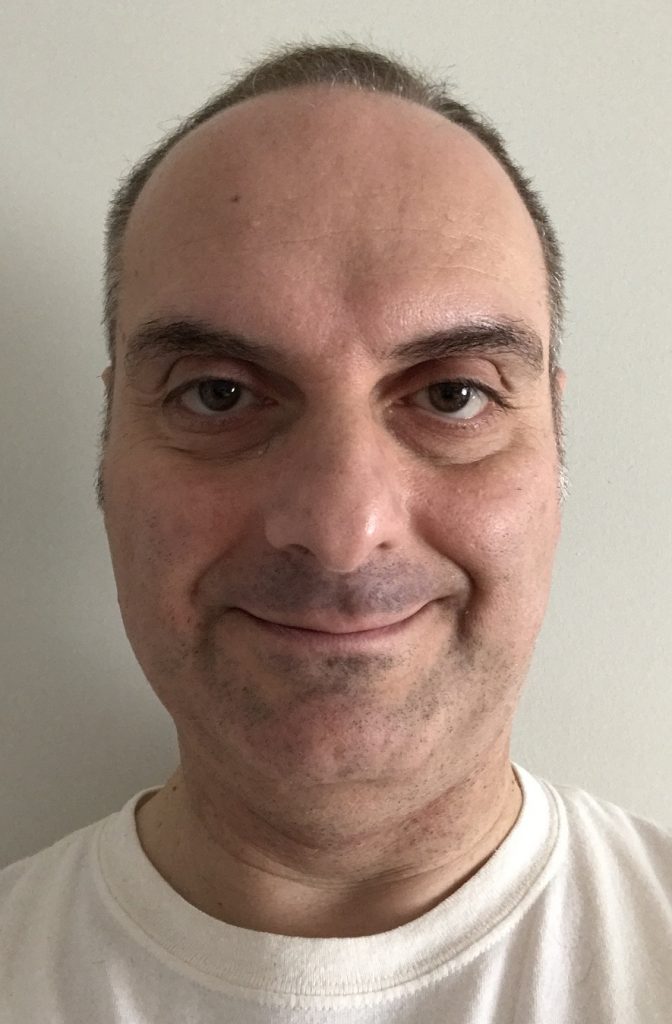
What Can Aerospace Teach You About Avoiding Human Errors? ![]() Gregory Blanc Safety
and Technical Training Consultant - Aero Tech Support **************************************
Please
join us on May 15th to hear our guest speaker present
the
topic
of Human Factors. Although human lives are not at risk in every work setting, HF training can be beneficial to quality and risk management professionals across all sectors. Tying together human, financial and organizational needs, Gregory Blanc’s talk will develop your awareness of the decision process in regards to workers’ motivations, and help you lead more efficiently. |
2.
Ad
/
Publicité
|
||||||||||||||||||||||
|
Gregory Blanc is a safety and technical training consultant, and has worked in aircraft maintenance for 10 years. He now develops projects involving inspection, quality and standard practices with all major players in the Montreal aerospace cluster. Gregory also helps them develop their workforce, and facilitates cultural integration among established work teams. He is a certified Aircraft Maintenance Engineer (AME M1/M2), technical team lead and inspector, and has developed extensive hands on experience with Bombardier products. Through his years as a technical expert, he has developed an intimate knowledge of the risks associated with human factors. Now specializing in their incidence on quality and management, he enjoys cross-sector opportunities to share and learn. **********************************************
Cost
ASQ Members ($40) Non-Members ($50) For STUDENT MEMBERS ONLY ($30) NOTE: For students wanting to get to the Sheraton Hotel, you can easily take the STM Express City Bus 747 which will drop you off at the Pierre Elliott Trudeau airport. After which, you may take the Sheraton's free shuttle to get to the hotel. Click HERE for more details. After the meeting, an ASQ member will often be available to drop off a student at a nearby bus or metro station. Bring
your business cards and be ready to
network. To
register for any event or for more information on events please
contact:
Mr. Sukhvinder Jutla Tel: (450) 647-8092 E-mail: Sukhvinder.Jutla@pwc.ca 3.
Sections 404 and 401 Annual Golf Tournament
Base
de Roc, Joliette
Commandites disponibles / Sponsorship opportunities Roger Pelletier: 514-476-5956 ou roger.pelletier@videotron.ca Chantale Simard: 514-941-5695 ou chantale.simard@videotron.ca Ovide Côté: 514-354-8006 ou cellulaire: 514-771-8006 Golf Registration Form (Word) Golf Registration Form (PDF) 4. The Editor's Corner
WHAT IS A PECHA KUCHA? That was my first question when I received an invitation from BSI Canada to attend a free event this past April 11th here in Montreal. Pecha Kucha is "a presentation methodology in which 20 slides are shown for 20 seconds each (six minutes and 40 seconds in total). The format, which keeps presentations concise and fast-paced, powers multiple-speaker events called PechaKucha Nights". This is the definition taken from the Pecha Kucha Wikipedia page; you can also find more information about Pecha Kucha here. I think we have all sat through PowerPoint presentations where there were too many slides, or too much text on the slides, or the overall presentation was too long, or the presenter was not that engaging, or worst of all, all these 4 combined. Pecha Kucha seems to help take care of at least 2 of these negatives: the number of slides is set at 20, and the total length of the presentation is set at 6 minutes 40 seconds. I suppose you could still put too much information on a slide, and a presenter's engagement prowess is still in the eyes and ears of the beholder. The event on April 11th took place in one of the event rooms at the Holiday Inn in downtown Montreal. A good size turnout of about 30+ people was treated to some good food, drink and networking before things got going. There were a number of BSI Canada representatives present, 4 of whom gave their own Pecha Kucha presentations during the evening. They were: Pierre Dovala, Gary Robinson, Robert Harrison and Marc Rougeot. The 5th speaker of the evening was Gilles Chevrier from the company Brenntag. All presentations were well done, with some presented in French and others in English. Some topics presented included (but were not limited to): Business Continuity (with emphasis on standards BS 25999 and ISO 22301) and Management Systems 1.0 vs. 2.0 (lite versus heavy). Some takeaways for me personally were the following: 1) Pecha Kucha seems to be a good vehicle if you want to make a short, concise presentation on a narrow subject matter. So for example, if you wanted to explain what contract review is, this method would probably work; if you however wanted to explain the entire ISO 9001 standard in a fair amount of detail, it probably would not. 2) It is best to prepare what you plan to say for each slide, given that each slide is only on the screen for 20 seconds. Most of the speakers did well with this, but there was the odd time when you just knew the speaker wished he could have had a few more moments. 3) The final takeaway for me was that I now have the urge to create and present my own Pecha Kucha! Near the end of the evening, the BSI representatives asked the attendees to provide their names and contact details if they would consider giving a Pecha Kucha presentation at a future event. And a good number of people did. BSI is planning the next series of Pecha Kucha events, and the tentative timetable is this Fall 2013. My overall impressions of both the event and of Pecha Kucha are very positive. I look forward to attending future events and seeing whether I can get it all done in 6:40! You may also read the above event review directly on the BSI Canada website, just without the pictures! Any feedback? Click on the link in the bottom right corner of this section and let me know. Thanks. |
|||||||||||||||||||||||
5.
A Word
from
your Section Chair
Hi everyone. Holiday season is just around the corner. We all look for a good deal when wanting to get away, but do we also think about the quality of the vacation. As we all know for holidays, customer satisfaction is primary and you get your customer feedback right on the spot. Have you had that moment at the hotel desk when your reservation has gone missing? So while on the beach, give a leisurely thought to who trained the person who made that margarita or the maintenance schedule of the air conditioner. Even on holiday, quality plays an important role in making those memories, mostly good ones but sometimes not the best: ask the passengers on some cruise ships. |
|||||||||||||||||||||||
6.
Had
You Come
to the
Last Event
By
Eric Stern, ASQ Senior
Member, CQA,
Publicity co-chair
![]() Had you come . . . Managing Risk within the Aerospace Supply Chain Mr.
Aaron Troschinetz from SAI Global presented “Managing Risk
within the Aerospace Supply Chain”. The
context was the AS9100C
requirement in point 7.2.2 that organizations define and implement a
process for risk management to meet applicable requirements. They have
to 1) assign responsibility; 2) define how risk criteria is outlined;
3) identify/communicate risk throughout product realization; 4) support
actions to mitigate risks that exceed risk criteria and 5) accept
remaining risk after mitigating actions.
He reviewed the definitions of the components, presented graphically the relationships between requirements, products, projects, programs and the critical actions going from supplier selection to contract review, program management, internal audits, preventive actions and management review at each level of the supply chain. He mentioned that there is no Risk Management methodology and categorized quantitative and qualitative Risk Management. Some of the common risks he mentioned included poorly developed technology, inadequate supply chain management, and delivery time constraints. The audience raised a number of interesting questions and comments related to risks: the cost/benefit ratio of risk management information, the quality management processes of suppliers that do not match the ones of the OEM, liability limitations, supplier system gaps, PMI methodologies, complex contract requirements, knowledge of the supplier capabilities, resource limitations, similarities in Health Canada and ISO 14971 medical device standards (I went to this website), counterfeit electronic devices (I tried to follow-up here), and AS9120 for distributors of aircraft components (I went here). **********************************************************
Eric Stern, CQA, senior member, publicity co-chair, developmental coach and consultant at Expertech CMSC, expressing his own opinions. ericst@iseffective.com For
networking with local
quality professionals explore these groups: http://tech.groups.yahoo.com/group/Quality_Montreal/ http://www.linkedin.com/groups?gid=90170
|
|||||||||||||||||||||||
7. Voice of the Customer
2013 Section Survey Almost Completed Card returns have slowed down but we still received one on May second, a month after the first responses started pouring in. So far, we've received 48 responses which is 50% more than in 2011 (when we had 32) and 85% more than in 2012 (when we had 26). This time we voluntarily removed 23 Leadership Team members from the survey, many of which used to respond and typically would do so quite favorably given their passion for the cause. This means the response rate is even more impressive but also that we've exposed ourselves to a lower rating. While still not over, there are trends we can share. Regarding "topics/fields of interest preferred at Section events", Professional Development ranked highest with 34 (71%), followed by Quality Systems with 31 (65%), and then Education with 13 (27%). Regarding the "What prevents/discourages from coming to section events", responses to date have been shared between Location and Subjects, both with 14 (29%), then Cost with 11 (23%), Transport to meeting with 9 (19%), Transport from meeting with 8 (17%), and then Start time with 7 (15%). The draw did attract participation. 42 (88%) were identified members (3 did not enter a member number, 3 had incorrect numbers). Of the 42, 19 (45%) were full or regular members, 10 (24%) were senior members, 9 (21%) were student members, and 4 (10%) were associate members. In 2012, the Member Satisfaction ratio was 90% and in 2011 it was 85.4%. So far, it's running at 75%. The drop can be, in part, explained by the lack of Leadership Team participation in the survey. This is not where we'd like it to be but it does indicate that, on average, members are "Mostly" satisfied with their membership. For those that replied, thank-you. For those who have not, please do so. It shouldn't take long and it's really important so we can learn and improve our activities. We look forward to your responses. We'll likely be proceeding with the draw at our May 15 event. Thank-you for helping your ASQ section! 8.
2012-13 Planned Events
Date, time, and location will be confirmed as we progress into the year. Most events are planned for Wednesday evenings and are held at the Sheraton Montreal Airport Hotel. Watch the Newsletter and our web site for further details.
Date Event |
|||||||||||||||||||||||
|
To register for any event of for more information on events please contact: Sukhvinder Jutla at (450) 647-8092 or e-mail at Sukhvinder.Jutla@pwc.ca. 9. The
Interview Corner
By
Kostya Polinkevych, Ph.D, CSQE, ASQ Senior MemberCONTINUOUS IMPROVEMENT AS A
COST AND TIME
EFFECTIVE APPROACH
Nowadays
technologies are getting more and more complex, computerized, and
“robotized”. Developed products often become
sophisticated systems which consist of multiple modules. Those modules
are often also complex objects themselves. The logic of interactions
between modules and sub-modules includes multiple scenarios and
conditions to follow. A lot of those systems are mission-critical or at
least very expensive. The role of Quality grows correspondingly. The
Cost of Quality grows astronomically; the losses may be very heavy and
can easily lead to a disaster or bankruptcy of a company.TO ACHIEVE REQUIRED LEVEL OF QUALITY AN INTERVIEW WITH DAVID TOZER It seems that everybody understands the importance of Quality and everybody wants to provide products or services of high quality. Here comes the problem: many methodologies exist, many researches are done and standards are developed. But to define the most effective way to achieve required quality is still not easy and requires a lot of experience, knowledge, skills and ability to see the light at the end of a tunnel. Analytical skills, clear vision, knowledge of tools used in the world of quality as well as ability to implement them effectively may help choose the simplest and the most cost-effective approach to achieve business goals with the required level of quality. Today we are addressing some of those questions to a remarkable person and an expert on Quality – Dr. David Tozer, who kindly agreed to share his experience with the readers of our Newsletter. ![]() Kostya: Our readers might be very interested to know more about you and your biography. Could you please tell us about yourself? David: I was born in England and I immigrated to Canada when I was 16 with my parents. I went to the University of Waterloo and picked up a few degrees. My first job after completing university was setting up a computer system, statistics and quality assurance systems. Eventually, I finished up making the quality systems for a company involved in drug safety testing. While doing this work I came across Juran’s book (Quality Control Handbook). It really opened my eyes to the role quality can play in organizations. One of the key ideas in Juran’s book is the idea of continuous improvement. I have been trying to promote continuous improvement and using evidence based management as a way to run a company as opposed to managing by the seat of the pants. I understand the need of inspection in testing and auditing; it is necessary to have good products and services leaving the company. The real purpose of doing these activities, in my mind, is to make the organization more effective. Continuous improvement is a way of getting everybody involved in innovation for the company. Companies must be innovative if they are to thrive in a competitive marketplace. Kostya: What subject did you study? David: I studied physics at university. Kostya: What area of physics? David: I was doing x-ray crystallography. The equations are quite horrendous compared to the equations in statistics. I got my Ph.D degree in 1976. How did I get into quality? In 1971, the US government and the Canadian government reduced funding for physics. I was not interested in going in the endless post doctoral fellow route; not enough money. So I had to go get a job somewhere else. I went to drug safety testing. Kostya: Did your Ph.D help you develop a system approach to use in areas of your professional activity? David: You learn to be disciplined and structured and all those kinds of things when working on research projects. That’s where I got my start in statistics. I had to do a lot of studying in statistics to optimize my crystallographic models. Some of the alloy crystal structures are quite complicated to imagine. Kostya: Did this experience help you later with Quality? David: Yes. I wrote a statistical computer program when I worked for Bio Research. The program was used for at least 25 years. It produced all the report pages, data and statistics. The only reason they had to stop using it was because they had to get rid of the computer since they could no longer get spares. I think you need to be self-disciplined and self-motivated. You cannot expect other people to do things for you; you have to do things for yourself. Kostya: If the government had not stop financing physics, would you have gone into Quality? David: I wouldn’t have gone into Quality. I would’ve continued with physics. Kostya: Do you regret that the government financing stopped? David: Well you can’t regret something you have no control over. You have to get on with it. Kostya: What were your greatest achievements in the quality field? David: When I was involved in the Canadian Patrol Frigate program I was involved in implementing a Total Quality Management system to improve the organization. We got a lot of people involved in the improvement process. At the beginning of the implementation of the TQM System the delivery of the first ship set was many months behind schedule. With getting people involved in improving the business system at Paramax we got a second ship set delivered with only a small delay. I really enjoyed working on the TQM project. One of the best parts of the project was having people understand how they fit into the big picture and seeing companies do better. It’s a lot of fun. In the quality field, that’s my biggest achievement. Kostya: Are you a big fan of continuous improvements approach? David: Yes, small continuous improvements. American companies always look for big improvements form expensive teams. Kaizen is the good way and you get everyone involved in the continuous improvement in the company. Many small improvements add up to something great. It’s what I’ve been trying to push and get people to do. Kostya: You mentioned you achieved significant results with this continuous improvement approach, and you started to tell us about success, and your greatest achievements. Tell us more about your experience and what was the original problem. How did you achieve success and what were the benefits of the business? David: At Paramax delivery was off schedule for 5-6 months. The company wanted to get it back on track again. We formed a senior management team that included the president, quality manager, different vice presidents, directors. This group decided on what were the most important things to work on for the company. We assembled teams of experts in the various areas and we trained them in continuous improvement, in proper team behaviour, team management and all the basic quality tools you need. We didn’t use very much statistics; we wanted to get people to work together. Using diagrams and metrics we got the teams to identify and eliminate bottle necks and improve the work flow. The way we organized the teams, we identified a team and a project for the team, train the team and start the improvement activity in the training session. A month later we get another team, trained them and got them working on a problem during the training. Then they were expected to go back and have regular meetings. I would facilitate the teams and make sure they met regularly. Nearly all the teams worked. I did about 13 teams and 12 of them worked. A lot of people enjoyed participating with their teams. Moral improved. Kostya: With the contracts like this, you had to deliver very high quality product and it is mission critical. So only if you make a really great investment of your intellect and made this commitment to quality improvement, only then you could achieve success. What was the approach to quality improvement? How exactly did you manage to do this? David: We got teams of people together. I was on the quality council and we prioritized the areas where we wanted the improvements to occur. Then we got the team of people together and then we trained them how to do quality improvement, and then we got the teams to meet once a week for an hour or so until the problem was solved. Each problem took about 2-3 months to solve. Kostya: Was this approach your own? Or did you borrow it from somewhere? Is it well known? David: It is based on the method that Juran publishes in his book. It’s very similar to six sigma (it wasn’t called that at the time). The outline for problem solving is very similar to six sigma. You define the problem, you measure, you analyze, you improve and you control. Six sigma was just becoming the methodology of the time out when I started that program. We implemented Top Quality Management it was called at that time. It had the same methods. The TQM system was not heavy in bureaucracy; it was getting the teams together and the teams would make presentations to management about what they did and things like this. What Juran recommended in the books. Kostya: So how much time was the whole improvement program? David: Well for me it was a full time job for two years. For the other people, it was once a week and then there would be homework to do during the week. It goes very quickly. People understand what they have to do and they fix things quickly. People are very reliable if you give them the chance. Kostya: Are you sharing this experience with your students? David: I don’t do that. I’m teaching students specific material, specific methodology like Six Sigma. Kostya: So you’re a big fan of this continuous improvement? David: Yes, I think it’s the way to go. Within 6 months, you can get benefits for the organization. I totally believe in it. I had a 100 percent support from management. Kostya: Did you implement audits when you came to the company? David: No. They were doing that from the beginning. There were 30-40 people doing audits and one person (me) doing continuous improvement. For the first two years I was involved in the auditing assessment program. I was the only full time person on the TQM program. The department manger and myself developed the training system and materials. Kostya: How was the system organized? How heavy was it on the documentation? David: It wasn’t very heavy on documentation. People made flow charts and other things to understand how the flow of the work went. It was that base level. We didn’t do a lot of statistics. We just got them to do some metrics and get some improvement. The documentation was through metrics. It was based on the six sigma methodology. I didn’t actually have any written procedures on that or anything like that. I didn’t spend a lot of time on bureaucracy. The important thing was to get the people that were doing the work to actually make the reports and present them to management. So they were guided that way. I didn’t do any return on investment calculations; I did not do any net present value calculations. The accounting system could not generate these number I a timely manner. We just got the thing together; we got people to work together and show them some tools they have to use to get results. Kostya: Did you formulate any strategic and tactical goals? Or you had just one goal to just be on track? David: Well the target was to be on track. We had to do many things to get on track. We had to identify the areas that were most in need of attention. Then, the quality council prioritized. We came up with a list of about 20 things that need to be done and we would then give them to the Quality Council to choose which one to work on. Using flow charts and all the other graphical tools, we just documented what was going on. Kostya: Did you introduce the measurement system to measure the progress improvements? David: There was no system in place when we started. We introduced metrics there. The only thing I did that wasn’t very effective was that I didn’t put the metrics in the area that was being measured. I kept them in the quality office and I learned afterwards that was the wrong thing to do. You learn as you go along. Kostya: What is the future of continuous improvement? Of the methodology? Do you think the methodology will be developed into something else or stay as it is? David: I think that it’s like statistics. Certain statistical tests have been around for 100 years now and not many people use them. There are simple statistical tests that we can use to help us make better decisions. We still haven’t gotten people to use these basic tools yet. Most small and medium sized companies need to learn how use the basic tools. Bigger companies, ones that are more invested in continuous improvement and statistics are developing new tools for continuous improvement. I however, am just trying to get people to use the basic tools. Many companies are not using the basic tools yet. Basic ideas, such as, using the Pareto principle to prioritize problems are not used. Setting priorities is efficient when using the Pareto principle (80/20 rule). Flow charts are very efficient at describing how the work proceeds. These are very simple tools. These charts don’t take a lot of time to make and they don’t require a lot of computer power. One can use a paper and a pencil if one wishes. Excel can also be useful. The basic metric to measure is cycle time. The thing is, many people are not using these simple tools. They are not taught these tools. Kostya: Does you education and rich background allows you to see the optimal solution to the problem? David: You don’t know if a solution in a business system optimal or not; you are just doing some improvement. In a business system, you probably can’t prove anything is optimal. Each process we improved wasn’t optimal in any strict mathematical sense; not in the sense of least squares or something like that. We just looked at the results, we got the metric, identified the direction we wanted to go, moved it in the right direction, and that was it. Little improvements here and there add up to a lot of improvement. Continuous improvement is never ending. Kostya: Thank you very much for your time and invaluable experience in quality improvement you shared with our readers. It was a great pleasure talking to you. **********************************************************************************
David Tozer has worked in the quality field for many years in the pharmaceutical, defense, aerospace, medical, manufacturing, and software industries. In industry, Dr. Tozer successfully led teams of people to improve their organizations using the Six Sigma methodology. He is an ASQ Certified Quality Engineer and Certified Six Sigma Black Belt, and teaches quality courses for the ASQ. Dr. Tozer has trained over four hundred people in various topics in the quality field, and implemented effective quality systems for many organizations. As a reminder: if any readers would like to obtain additional information, please provide us your feedback to: voc@asqmontreal.qc.ca.
|
|||||||||||||||||||||||
10.
Welcome
to our New Members
APRIL
2013
Ammar Abdallah Youssef Abidar Sangeeta Basarke Farid Bayat-Mokhtari Suzanna Busat Xavier Jacques-Bedard Juan P. Ruesga |
|||||||||||||||||||||||
11.
Site
Members
ASQ Montreal Section thanks our Site Members: |
|||||||||||||||||||||||
12.
Other
ASQ
Events
|
|||||||||||||||||||||||
13. ASQ NewsASQ
Member Leader LinkedIn Page Placing
Safe Food in the Market—Quality for LifeTM
Video
|
|||||||||||||||||||||||
14.
ASQ
Montreal Section Education Program 2012-2013
By
David
Tozer,
Ph.D., ASQ CQE and SSBB, Education & Audit Chair Having ASQ certification gives you an edge in the market and can significantly increase your income. ASQ Certification often leads to higher paying employment. The money invested in education and certification increases chances of finding employment quickly in the down sizing environment we live in. People who take the section sponsored refresher courses, and spend at least twice as much time as spent in the classroom on self study, have an 80%, or better, chance of passing the examination on the first attempt. Certified Quality Engineer Topics include: quality concepts, cost of quality, human resources, team formation and group dynamics, inspection, metrology, sampling, reliability, quality standards, quality audit, statistics, design of experiments, process improvement, liability, and modern management methods for improving quality. Certified Six Sigma Black Belt Topics include: quality concepts, cost of quality, enterprise wide deployment, business process management, project management, team formation and group dynamics, define, measure, analyze, improve, control, lean enterprise, statistics, design of experiments, and design for six sigma. Certified Six Sigma Green Belt Topics include: quality concepts, cost of quality, enterprise wide deployment, business process management, project management, team formation and group dynamics, define, measure, analyze, improve, control, and statistics. Certified Manager of Quality/Organizational Excellence Topics include: quality concepts, quality planning, customer focus, quality standards, project management, cost of quality, team formation and group dynamics, human resources and improvement.
Certified
Quality Auditor Topics
include: quality concepts,
team
formation and group dynamics, management responsibility, audit
objectives, audit preparation, audit conduct, audit reporting,
sampling, and basic statistics.
Certified Quality Inspector Topics include: quality concepts, team formation and group dynamics, geometry, metrology, reading drawings, mechanical processes, statistical process control, inspection, and sampling. Calendar and Registration Form Questions? In house courses, etc.: David Tozer: (514) 694-2830, davidtozer@qualitiqua.com
|
|||||||||||||||||||||||
15.
Executive
Committee Meetings & Officers
Section Executive
Committee
(Leadership Team) Meetings are held at different locations, starting at
6 PM. The next regular meeting is tentatively scheduled for : June
5, 2013 Consult the List of Your Executive
for
2013 here |
|||||||||||||||||||||||
16. RecertificationIs Your Recertification Due?Look at your wallet card to see when your present certification is due to expire. If it says June 31, 2013 you are in time. Get your journal, with supporting objective evidence (you should know what that is) to me before the end of December 2013. If it says that you were due in December 2012 then you have until the end of June 2013 to submit your journal or it will lapse. Maybe you’ve decided not to recertify because (a) you are unemployed, (b) no longer in the quality field or perhaps, (c ) your employer no longer will pay for it? Think about this, your certification belongs to you and no one else. Your name is on it and no one else’s. It is portable and you can bring the recognition to your next company. Remember how hard you had to study for it? If you let it lapse you must rewrite the exam. Do you know where you will be employed in a year or so? Well congratulations if you do because most of us don’t and it could come in handy then, it sure won’t hinder you to retain it. The cost of $59 USD to renew one certification is much less than it would to rewrite. If you are unemployed, then contact ASQ directly at 1-800-248-1946. Ask for “Recertification” then explain your unemployment situation to them. You may be able to have your due date extended. But at $59.00 that is not really that much if it will help land your next job? If you are a member of Section 0401 Montreal, then contact Norman Dickinson at certification@asqmontreal.qc.ca or at 514-334-6102 to find out where to send your journal. If you are NOT a member of Section 401, then contact ASQ directly at 1-800-248-1946. 17.
Unemployed Member Dues
Unemployed ASQ members receive a discount on their membership dues based on consecutive years of membership.
Eligibility Criteria
Benefits
NOTE: The following links require that you be logged into your account before you try to activate them. Download the Unemployment
Program
Application (July 2012–June 2013 Membership Groups) (Microsoft Word
document, 101 KB) |
|||||||||||||||||||||||
18.
Feedback
Please send us your comments about the ASQ Montreal Section 0401 E-Newsletter (topics, layout, length, etc.). Do you want to contribute an article (English or French) or a good idea? Contact us by e-mail. |
|
||||||||||||||||||||||
Pass
it on
We invite you to forward this Newsletter to friends and colleagues who may be interested. |
|||||||||||||||||||||||
|
The
ASQ
Montreal
Section 0401 Newsletter is prepared by and published for its members. How to
Opt Out. This
e-mail
is being sent in the course of normal Montreal Section
business
to the e-mail address of record. We are not responsible for forwarded
e-mails. If you no longer wish to receive e-mail communications from
the Montreal Section (your section) of ASQ, please visit your ASQ
account to unsubscribe or
reply to this message, indicating Opt
Out in the
e-mail body
and in the title. |
|||||||||||||||||||||||